


- 2026-08 We release the OSReward benchmark, the OS-Shepherd-100K corpus, the OS-Shepherd 9B / 35B checkpoints and the evaluation code.
- 2026-07 The paper is out on arXiv and Hugging Face, and this project page is live.
How reliable is a VLM judge for CUA trajectories?
A CUA trajectory is the interleaved record of an agent's screens, actions and reasoning. Deciding whether it fulfilled its instruction is the reward signal behind evaluation, data curation and reinforcement learning. Human-written verifiers cover only a handful of curated tasks and cannot inspect a static corpus at all; human annotation cannot keep pace. The field has therefore settled on vision-language models as judges — without ever measuring how reliable those judges are.
OSReward measures it, on trajectories built for the purpose rather than recycled from benchmarks whose own flaws would be indistinguishable from judge error.
- A standardized benchmark for the CUA reward signal. 1,019 human-gold trajectories collected on cross-platform infrastructure we build and operate end to end, each labeled by three annotators with meta-review on disagreements. The benchmark has three sets: OSReward for the full evaluation, OSReward-Hard for challenging cases, and OSReward-Multi for alignment and efficiency grading.
- The broadest evaluation of VLM judges for CUA to date. 27 models under one fixed protocol. Every family shares one lenient failure mode, the verdict turns out to live in the text history rather than the screen, and the aggregate ~90% collapses on hard cases. The judges reliable enough to trust cost too much to run at the scale evaluation and training demand.
- OS-Shepherd-100K, the corpus derived from those findings. The largest reasoning-annotated judge corpus for CUA to date, selected from 321,631 ensemble verdicts over self-collected rollouts and four open trajectory sets. Every sample carries the judge's reasoning, not just a binary verdict.
- Open reward models a lab can host. OS-Shepherd 9B and 35B, trained on that corpus to target the false-success mode directly, and level with commercial judges at 30–60× lower cost.
The benchmark
1,019 human-gold trajectories across web, Windows, Ubuntu and mobile, read as three views.
What we found
One shared failure mode, a text-driven verdict, and a hard set where the field collapses.
Leaderboard
27 VLM judges scored under one protocol, on both the full set and the hard set.
OS-Shepherd
An open corpus and open 9B / 35B reward models a lab can run at training scale.
The whole field leans lenient
Judges consistently accept far more failures than they reject successes. Across the board, models fail to flag incomplete tasks, showing a clear leniency bias rather than a strict evaluation standard.
Strict–lenient plane
Models above the diagonal lean lenient, accepting more failures than they reject. On OSReward-Hard, this leniency bias visibly worsens as the distribution shifts left.
Not measurable before
Human verifiers are unscalable for static corpora. While model judges are the only practical alternative, their reliability has remained largely untested.
Harder than judging text
A CUA verdict means reading a long, interleaved record of states, actions and reasoning, then deciding whether the environment truly reached the goal rather than whether the agent merely claims it did.
Built from scratch
Reusing existing benchmarks' rollouts would confound judge errors with flaws in the runs. OSReward is built on dedicated cross-platform infrastructure so a wrong verdict is attributable to the judge.
A gold set built for judging the judge
Realistic environments on four platforms, human-vetted instructions, rollouts from four agent families, and three independent annotators per trajectory — roughly 800 human hours.
From realistic environments to the gold benchmark
How each trajectory in OSReward is curated.
Realistic environments


lived-in machines, realistic
apps and live websites
Annotator setup
learn the apps, move in:
profiles, files, seeded state
Instructions
written & cross-checked
Agent rollout




with diverse backbones
Raw trajectories
screenshot · thought · action
up to 100 steps
Pre-filter
environment casualties
dropped automatically
Three annotators
independent verdicts,
a written reason each
Meta-review
two senior reviewers
deliberate the splits
OSReward
OSReward-Hard
the cases that split humans
30 / 70 success / fail
OSReward-Multi
trajectory-level alignment
and efficiency
-
1 A lived-in machine
Stock benchmark images are extended into lived-in machines — real files, user profiles, seeded databases, distractor content — and web tasks run on live sites.
real files user profiles seeded databases distractors live websites -
2 Annotators move in
Annotators learn the apps, build profiles, and seed files and state — every task starts on a machine with a history.
-
3 Instructions, cross-checked
Written against what the environment can verify — grounded, answerable, open-ended. Peer review cuts ~1,500 drafts to ~800 tasks.
fibonacci.py → LaTeX formula, render in TeXstudio → Impress PyCharm run config: main.py, env DEBUG_MODE=False “Make the video look better” — no verifiable end state -
4 Agents roll out
Each task runs on one to three executing agents across the Claude, Gemini, Kimi and Qwen families, so no single agent’s style dominates the data.
-
5 Raw trajectories
Each run is the trace a judge will read — screenshot, thought, action — up to 100 steps long.
-
6 The pre-filter
Runs wrecked by the environment — anti-bot blocks, network failures, frozen executions — are dropped before any human time is spent.
-
7 Three annotators, independently
Three independent verdicts per trajectory, each with a written reason. One strict rule: an answer the agent did not obtain or verify through the environment is a FAIL — even when it happens to be correct.
SUCCESS SUCCESS FAIL + reason, every time -
8 Unanimous, or escalated
Unanimous verdicts are final. Splits escalate — no gold verdict rests on a single reader.
-
9 Meta-review
Two senior reviewers deliberate — not a vote. Extra steps that still reach the goal pass; a wrong action fails; residual-quality runs are discarded.
extra steps, still correct goal basically reached an action is wrong -
10 The gold set
OSReward: 1,019 gold trajectories across four platforms, balanced 43 / 57 success / fail. SUCCESS carries alignment and efficiency grades; FAIL carries an error type — action, perception, planning & reasoning, memory.
Web 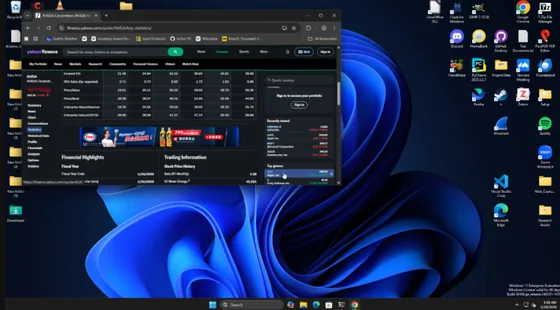
Windows 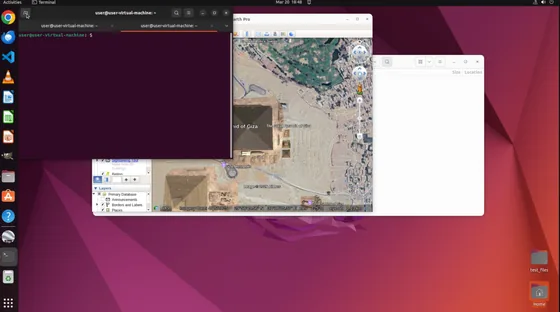
Ubuntu 
Mobile -
11 OSReward-Hard
The cases that split the annotators, re-verified in a further review — real difficulty, not annotation noise — at a 30 / 70 success / fail split.
-
12 OSReward-Multi
Successful trajectories receive trajectory-level alignment and efficiency ratings. Together: three views of one gold set.
OSReward
The full set. Four platforms, four agent families, GUI-only and GUI+CLI action spaces, from dozen-step chores to 100-step professional workflows. Balanced 43 / 57 success / fail, so binary accuracy is not majority-driven.
OSReward-Hard
A challenge subset drawn mostly from trajectories that split human annotators, rigorously re-verified under meta-review to capture genuine edge cases. Comprises deceptive runs that read like completed tasks, at a 30/70 success/fail split.
OSReward-Multi
The successful trajectories carry sub-labels for human alignment (did the actions match the task intent) and efficiency (how free the run was of wasted steps), enabling fine-grained quality grading beyond binary verdicts.
Outcome composition
The Hard set deliberately raises the share of failures, to expose how easily judges are fooled by false successes. Failed runs are markedly longer — a first sign that length confounds verification.
Platform mix
Ubuntu contributes the most trajectories and is the only platform collected in both a pure-GUI and a GUI+CLI action space.
Four things the judge study settles
27 VLM judges under one fixed protocol: read the trajectory's last N states with the per-step reasoning and action text, return a verdict. No task-specific harness, no tool access, no step-level supervision.
State-of-the-art VLMs judge CUA success at just under 90% binary accuracy with no clear single winner—the top three sit within 0.2 pp, and frontier open-weight models have effectively closed the gap with commercial counterparts.
Every judge family shares one dominant failure: accepting an incomplete task as a success. It is two-thirds of all errors, and it is the leading error mode of every judge at no less than 48% of its mistakes. Over-accepts outnumber over-rejects more than three to one.
Verdict accuracy relies primarily on text history rather than visual state. Dropping the per-step thought and action text costs 7.2 pp on average and flips 22.7% of verdicts, whereas omitting visual inputs has minimal impact on accuracy.
High reliability is prohibitively expensive. Judges capable of ~70% on OSReward-Hard cost $45–100 to evaluate the full set once, failing to scale for training-time reward.
Cost against accuracy
Accuracy and cost are in direct tension, sharpest on OSReward-Hard. The dashed line traces the frontier: the best accuracy reachable at each price. The OS-Shepherd models are the low-cost points nearest it.
What judges get wrong
Every incorrect verdict is labeled into over-accepts and over-rejects (three modes each). One mode dominates every family: over-accepting incomplete tasks. This field-wide leniency bias occurs because judges over-rely on the agent's own closing claims.
Where the hard set bites
Mean per-judge binary accuracy on OSReward-Hard. Windows is the hardest platform to judge and mobile the easiest. Failures dependent on visual state (perception and action) are significantly harder to catch than text-legible planning and reasoning errors.
What actually drives a verdict
Change in binary accuracy when perturbing one input component at a time. Removing step-level text dominates, whereas visual ablations barely register on aggregate accuracy. However, these seemingly harmless visual changes still flip 5–7% of individual verdicts, directly impacting instance-level reward labeling.
A comprehensive judge evaluation
Low success recall means a strict judge, low fail recall a lenient one. Balanced accuracy is their mean.
Main-setting results
Finer-grained grading
On OSReward-Multi, every judge additionally rates alignment and efficiency. Quality grading is markedly weaker than binary outcome judging: the top model falls from ~90% accuracy to the low sixties. The gap between AUC and macro-recall reveals that while judges can rank quality levels effectively, their scoring thresholds remain poorly calibrated, particularly for alignment.
| Macro-recall | ||||
|---|---|---|---|---|
| Judge | Align | Effic | Multi | AUC |
Judge agreement and ensembling
No model-side knob buys reliability.
- κ ≈ 0.71 — pairwise agreement among top judges. They herd on the same hard trajectories, so a wider pool mostly adds copies of the same mistake.
- 6–9% — verdicts flipped by re-running the same judge on the same input at T = 0.7. Aggregate accuracy is stable under temperature; individual labels are not, and that is what a reward model consumes.
- +1 pp — what a top-3 majority vote buys over the best single judge, at several times the cost.
- 99.2% — the oracle: accepting any pooled judge's correct verdict. The pool almost always contains a correct answer; what a vote cannot recover is which judge to trust on which trajectory.
An open reward model a lab can run on an academic budget
Reliable judging is unaffordable at the call volumes rejection sampling, RL and trajectory mining need. OS-Shepherd is trained on a corpus we release, aimed squarely at the false-success mode, and cheap enough to run at training scale.
OS-Shepherd-100K
Trajectories are scored by an ensemble of strong judges under varied screenshot settings, entering the final dataset only upon independent agreement. This strict consensus filter retains approximately 85% of the initial pool, ensuring only robust reasoning traces are carried into the training corpus.
Two-stage recipe
Start from Qwen3.5. Build accurate judging first, then target the sharpest failure the study exposes.
SFT stage
Fine-tune on the agreement-filtered corpus to judge under the main setting. This alone lifts the 9B far above its base, primarily by correcting the base model's near-total leniency.
RL stage
What SFT leaves behind is the false success — the most harmful error for a reward signal, since it directly reinforces incorrect behavior. The ability to catch it is latent rather than missing, so those cases are mined and optimized with GRPO.
Since verdict accuracy relies heavily on text history, every sample provides the judge's full reasoning trace to serve as a dense, direct optimization signal.
How the corpus is built
Self-collected instructions are filtered, rolled out, and joined with open-source trajectories. The combined pool is then ensemble-judged, retaining only the verdicts with unanimous agreement.

OS-Shepherd-9B
Moves from the bottom third of the field into the mid-tier commercial band on the full set. On OSReward-Hard, it maintains a balanced strict-lenient profile, catching 57.6% of deceptive false successes. At $1.36 to evaluate the full set, it operates at roughly two-thirds the cost of its nearest commercial equivalent.
- OSReward accuracy
- 86.1+9.4
- OSReward-Hard accuracy
- 60.2+20.8
- Hard fail recall
- 57.6+43.5
- Base
- Qwen3.5-9B
OS-Shepherd-35B-A3B
Applying the identical pipeline at 4× parameters yields similar outcomes: a 2.4 pp gain on OSReward-Hard balanced accuracy, comparable full-set performance, and the same strict-lenient balance. While binary judging scales marginally, the 35B model grades noticeably better on fine-grained quality axes.
- OSReward accuracy
- 85.6+3.4
- OSReward-Hard accuracy
- 62.7+11.6
- Hard fail recall
- 60.1+23.2
- Base
- Qwen3.5-35B-A3B
Against the untuned base
Both base models are near-total accepters, with the 9B base catching only 14.1% of hard failures. Training successfully shifts the operating point: it significantly boosts failure recall with only a minor reduction in success recognition, yielding a higher overall balanced accuracy.
| OSReward | OSReward-Hard | |||||||
|---|---|---|---|---|---|---|---|---|
| Model | Acc | sRec | fRec | BalAcc | Acc | sRec | fRec | BalAcc |
Held-out benchmarks
Agreement with each benchmark's own human-written verifier, on matched subsets. Agreement is platform-driven, not judge-driven: every judge does best on mobile and falls well short on desktop. The OS-Shepherd models rank as the top open judges on OSWorld and AndroidWorld, and sit within the frontier cluster on WebArena, outperforming general open models up to 44× the 9B's size.
Leniency resistance transfers
Recall on truly-failed runs. General Qwen models remain lenient across all scales (30B to 397B), whereas OS-Shepherd-9B consistently catches far more real failures. This leniency resistance is acquired purely through our training pipeline. Furthermore, none of these benchmarks' tasks or trajectories were seen during training, ensuring a strictly out-of-distribution evaluation (particularly evident on OSWorld).
A single 9B, trained on none of them, carries its de-biasing across all three at a cost that scales to training-time reward. It does not yet match frontier accuracy, but closes most of the gap at a fraction of the scale — the direction a scalable CUA reward signal must move.
Data Viewer
Look at the cases yourself. Step through a trajectory the way a judge sees it — the instruction, the agent's actions and its reasoning — make your own call, then reveal what the annotators decided and how the judges scored it.
Open code, data and models
The benchmark, the training corpus, both reward models and the evaluation code are all released.
OSReward
1,019 gold trajectories with verdicts, plus the Hard and Multi views.
OS-Shepherd-100K
Reasoning-annotated judgments, kept from 321,631 judge instances by ensemble agreement.
OS-Shepherd 9B / 35B
Open, self-hostable reward models. Weights plus the judging prompt.
Code
Evaluation harness, the judging protocol, and the training recipe.
BibTeX
@article{sun2026osreward,
  title={OSReward: Instituting Standardized Evaluation for Cross-Platform Computer-Use Reward Models},
  author={Sun, Qiushi and Cheng, Kanzhi and Wang, Yian and Yang, Bowen and Yan, Hang and
          Chen, Liheng and Xu, Fangzhi and Ding, Zichen and Chen, Nuo and Cao, Jialin and
          Gong, Xingdong and Li, Zehao and Jin, Kaiming and Yuan, Xinfeng and Liu, Zhoumianze and
          Gong, Jingyang and Yin, Zhangyue and Gao, Jiahui and Wu, Zhiyong and Xie, Tianbao and
          Zhang, Jianbing and Kao, Ben and Kong, Lingpeng},
  journal={arXiv preprint arXiv:2607.28609},
  year={2026}
}